The Problem With Missing Them
Most visitors to Australia never encounter a quokka. They stick to the mainland cities, Sydney, Melbourne, and Brisbane, without realising that one of the world’s most extraordinary animals lives just a 30-minute ferry ride from Perth. The quokka remains one of Australia’s best-kept secrets, and that’s a genuine shame.
Why It Matters
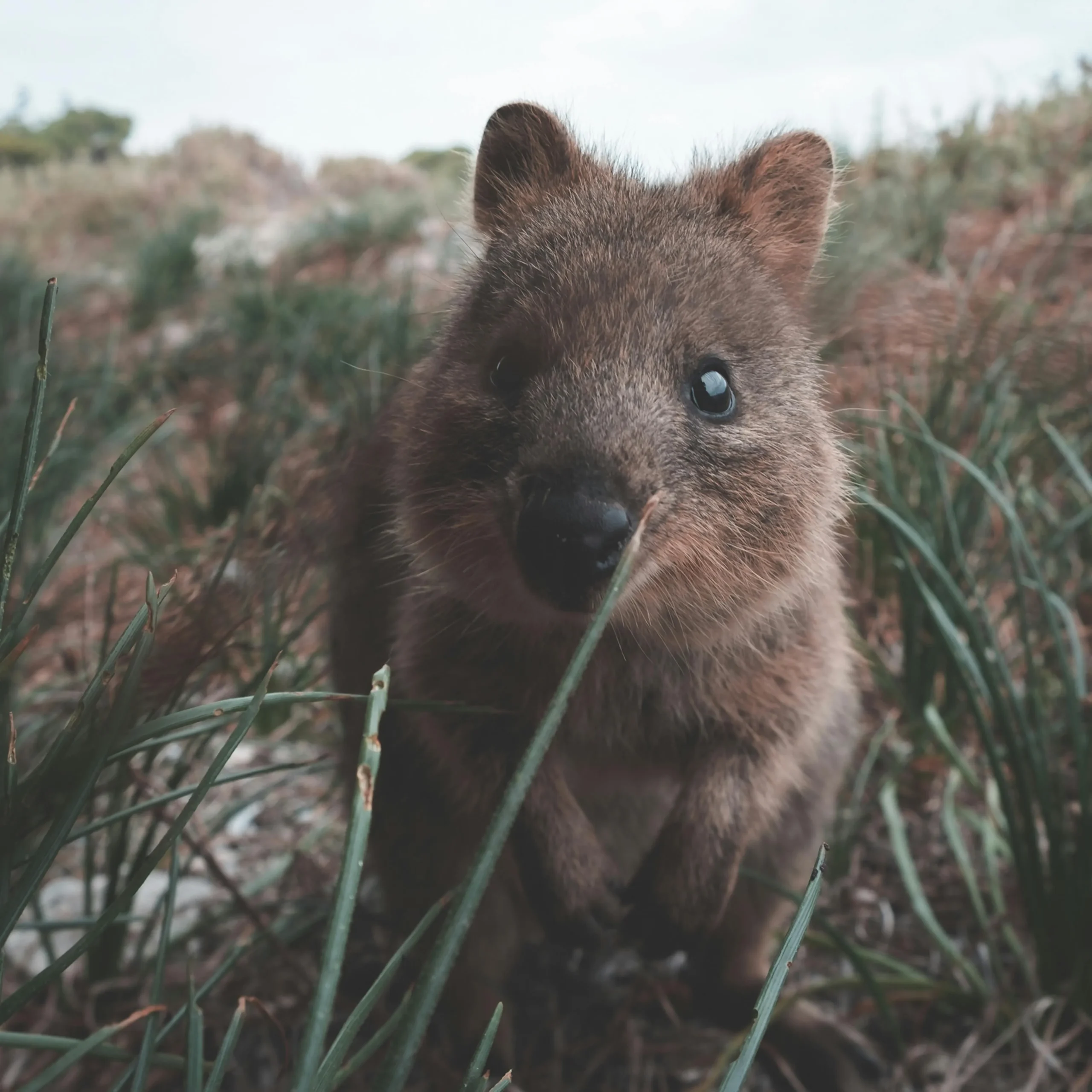
The quokka (Setonix brachyurus) is a small macropod, the same family as kangaroos and wallabies. What makes them remarkable isn’t just their perpetual smile, a result of their facial structure, but their extraordinary fearlessness around humans. They are one of the few wild animals on earth that will actively approach you.
)
What You’ll Learn
In this guide, we’ll cover where quokkas live, the best times to visit, how to photograph them ethically, and what conservation efforts are keeping their population stable.
1. Where Do Quokkas Live?
Quokkas are found almost exclusively on Rottnest Island, located 18 kilometres off the coast of Fremantle, Western Australia. A smaller population exists in the forests of southwest Western Australia, but these are rarely seen.
Rottnest Island, affectionately called “Rotto” by locals, was named by a Dutch explorer in 1696 who mistook the quokkas for large rats. The name roughly translates to rats nest, an unfortunate label for such a charming creature.
Lorem ipsum dolor sit amet, consectetur adipiscing elit, sed do eiusmod tempor incididunt ut labore et dolore magna aliqua. Ut enim ad minim veniam, quis nostrud exercitation ullamco laboris.
- Benefit 1: Quokkas are active at dawn and dusk, making early morning visits ideal
- Benefit 2: The island is car-free, so exploring by bicycle is the standard way to get around
- Benefit 3: Entry to the island requires a conservation fee that directly funds quokka protection
2. How to Photograph a Quokka Ethically
The famous “quokka selfie” has become a rite of passage for visitors. Getting one requires patience rather than pursuit; quokkas are curious and will often approach on their own terms.
Lorem ipsum dolor sit amet, consectetur adipiscing elit, sed do eiusmod tempor incididunt ut labore et dolore magna aliqua. Ut enim ad minim veniam, quis nostrud exercitation.
- Benefit 1: Crouch low and wait, and never chase or corner them
- Benefit 2: Use natural light in the early morning for the best results
- Benefit 3: Feeding quokkas is illegal and carries a fine of up to $300 AUD
Touching or feeding a quokka is prohibited under Western Australian wildlife law. Observe and photograph from a respectful distance, and let them approach you.
3. Conservation Status
The quokka is classified as vulnerable by the IUCN Red List. Their mainland population has declined significantly due to introduced predators, with foxes and cats being the primary threat. On Rottnest Island, they remain relatively protected due to the absence of natural predators.
Lorem ipsum dolor sit amet, consectetur adipiscing elit, sed do eiusmod tempor incididunt ut labore et dolore magna aliqua.
- Benefit 1: The Rottnest Island Authority conducts annual population surveys
- Benefit 2: Current estimates place the island population at between 10,000 and 12,000 individuals
- Benefit 3: Visitors directly contribute to conservation through the island’s landing fees
4. Best Time to Visit
Western Australia’s climate makes Rottnest Island accessible year-round, but the optimal window is September through November, the Australian spring. Temperatures are mild, crowds are smaller than the summer peak, and quokka joeys are often visible during this period.
Lorem ipsum dolor sit amet, consectetur adipiscing elit, sed do eiusmod tempor incididunt ut labore et dolore magna aliqua. Nisi ut aliquip ex ea commodo consequat duis aute irure dolor.
- Benefit 1: Spring brings newborn joeys emerging from pouches for the first time
- Benefit 2: Cooler temperatures mean quokkas are more active throughout the day
- Benefit 3: Ferry tickets and accommodation are significantly cheaper outside of December and January
September to November is the sweet spot, offering mild weather, smaller crowds, and the highest chance of spotting joeys alongside their mothers.