The truth is simple: the material of your welding table isn’t just a “nice-to-know” detail. It directly affects how accurate your work is, how long your table lasts, how much time you spend on maintenance, and how enjoyable your day in the shop feels.
This guide breaks down the most common welding table materials from raw cast iron, nitrided cast iron, nitrided steel, and stainless steel, and explains how to pick the right one for your shop and your work.
What Welding Tables Should Be Made Of (and Why It Matters)
A welding table isn’t just a flat slab you tack steel onto.
It’s the foundation of your entire workflow.
Material Thickness: Why 20–25mm Matters
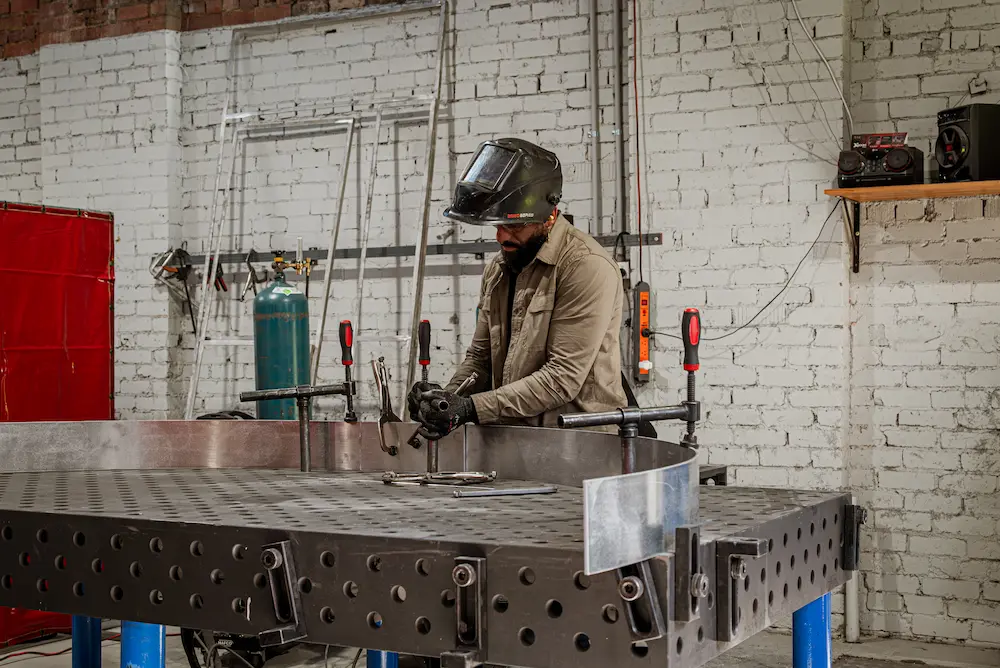
Regardless of the material you choose, thickness plays a huge role in rigidity and vibration dampening.
- Raw Cast Iron: ~20mm
- Nitrided Cast Iron: ~25mm
- Nitrided Steel: ~25mm
What You’ll Learn
In this guide, we’ll cover where quokkas live, the best times to visit, how to photograph them ethically, and what conservation efforts are keeping their population stable.
|
|
Material 1: Raw Cast Iron |
The traditional “old school” favourite
A raw cast iron welding table brings excellent rigidity and natural spatter resistance. Cast iron has been used in machining and fabrication for decades because of its natural stability and flatness.
Advantages |
Disadvantages |
Best for |
|
|
|
If you like things “the old way”, raw cast iron still delivers. But there are modern upgrades that solve many of its issues.
|
|
Material 2: Nitrided Cast Iron |
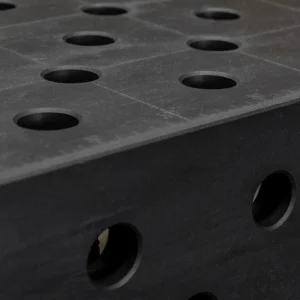
A cast iron table with modern armour
Nitriding is a surface-hardening treatment where the iron is heated in a nitrogen-rich environment.
This transforms the outer layer into a hard, wear-resistant, spatter-resistant surface, while the core keeps all the benefits of cast iron.
Advantages |
Disadvantages |
Best for |
|
|
|
This is what cast iron should have always been.
|
|
Material 3: Nitrided Steel |
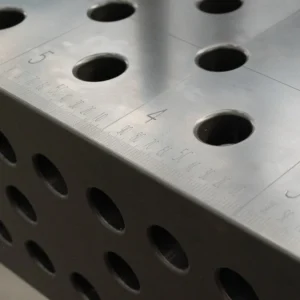
The modern workhorse in fabrication shops
High-quality welding tables today are often made from nitrided steel, usually around 25mm thick.
Steel tables are already strong and durable, but the nitriding takes them to another level.
Advantages |
Disadvantages |
Best for |
|
|
|
For most fabricators, nitrided steel is the best steel for welding tables. It fills the sweet spot between durability, cost, and practicality.
|
|
Material 4: Stainless Steel |
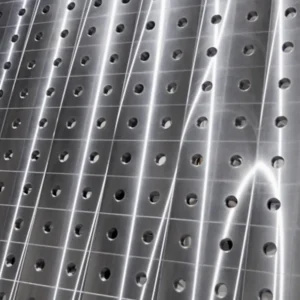
Niche… but very useful in specific industries
Stainless steel welding tables look great, but they’re not for everyone.
Advantages |
Disadvantages |
Best for |
|
|
|